Caribbean faces rising heat and drought risks as El Niño strengthens into 2027
Climate agencies are warning that stronger El Niño conditions could bring prolonged drought, extreme heat, wildfires and water shortages across parts of the Caribbean into early 2027.
26th of August 2026
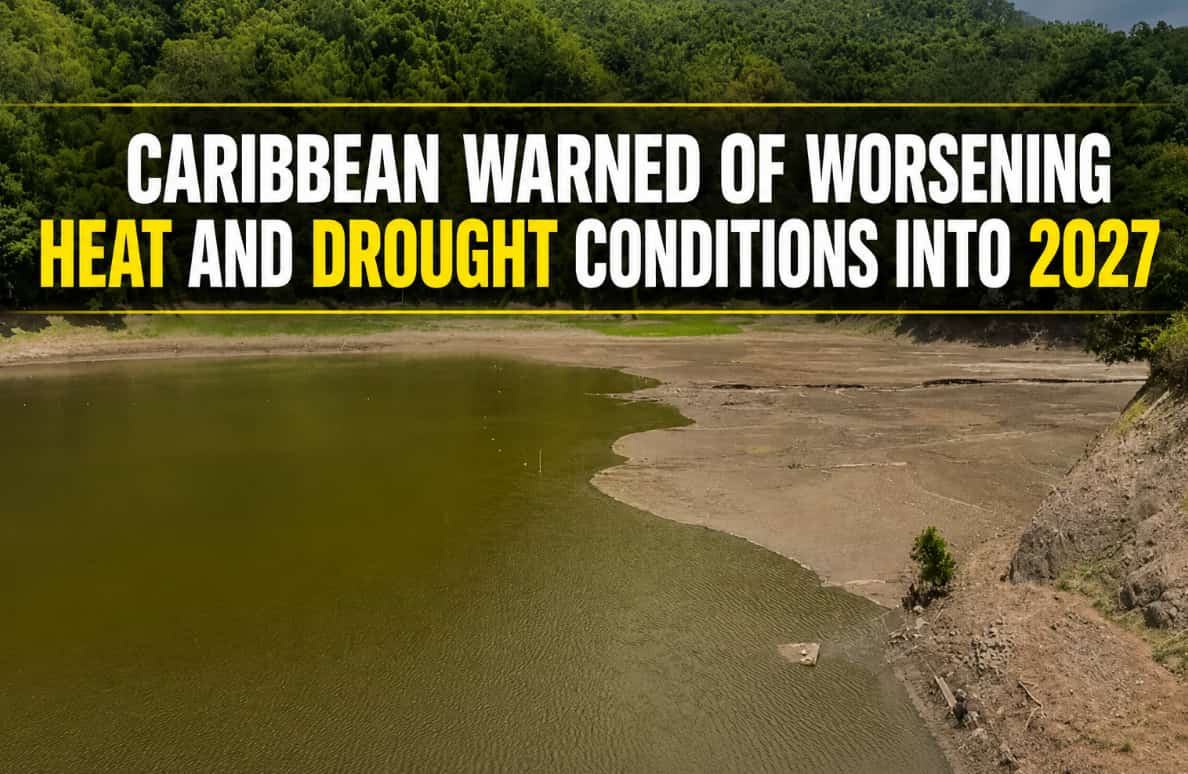
The Caribbean Institute of Meteorology and Hydrology (CIMH) and the University of the West Indies Climate Studies Group Mona (UWI CSGM) on Tuesday, August 25, has urged governments, businesses, farmers and households across the Caribbean to prepare for hotter and drier conditions as El Niño is becoming stronger. This raises a risk of drought, wildfires, extreme heat and marine heat waves through 2027.
The warning comes as August-October marks the peak of the heat season, while the usual dry season is expected to begin around November. The agencies also said that the current dry conditions might continue into the next year. The next heat season between March and May shows possibility of record–breaking heat
CIMH climatologist Dr. Cedric Van Meerbeeck said that the El Niño conditions became stronger from weak to moderate between May and July 2026 and have continued to intensify.
CIMH and UWI CSGM forecasts also show that El Niño could reach very strong levels between October and December 2026 and remain in place until the peak of the Caribbean Dry Season which is March 2027.
The agency further warned that the areas that are already facing drought conditions, particularly in the Eastern Caribbean, could see water resources recover more slowly during the Wet Season, between September and November.
By October or November, drought conditions are expected across much of the Windward and Leeward Islands, the ABC Islands of Aruba, Bonaire and Curaçao, parts of Jamaica and Hispaniola, and sections of The Bahamas.The conditions could also continue into early 2027.
Belize and Jamaica have also been identified as areas of concern because they rely on rain-fed agriculture. Reduced rainfall and higher temperature could lead to agricultural losses, which would affect food supplies and the livelihoods of farmers.
Professor Michael Taylor, Co-Director of UWI CSGM, said that the risks which were identified earlier in the year are now becoming more visible.
Van Meerbeeck said that past El Niño events have been linked to severe droughts, including the ones recorded in 2009-2010 and 2014-2016. Risk of extreme humid heat, wildfires and marine heatwaves which can lead to coral breaching may be increased due to weather patterns.
CIMH Principal Dr. David Farrell stressed the need for early action, he said, “proactive measures are vital for mitigating the impacts of extreme weather events on climate-sensitive sectors, communities, and national economies.”
Trade and living costs can be affected because Caribbean countries heavily depend on imported goods. Drought can affect food production and supply chains, while reduced water levels can disrupt major trade routes.
The latest NOAA assessment provides further support for the forecast. A greater than 90% chance of very strong El Niño conditions during the
Northern Hemisphere fall and winter of 2026-27 is given by NOAA. A 69% chance that the October to December 2026 period will produce an event stronger than previous El Niño events recorded since 1950 is also indicated.
The tourism sector might also face pressure as visitors and workers face longer periods of heat, while businesses may need more freshwater and cooling.
Latest
- Guyana: Businessman shoots suspected robber during Eccles robbery, Police investigate
-
Trinidad and Tobago proposes $23 Million budget increase for National Carnival Committee in 2027 -
Caribbean nations lead global CBI Index 2026 rankings -
Montserrat Festival 2026 Calendar Unveiled, With Events Running From December 4 to January 1 -
Reports claim Christopher “Dudus” Coke fought Sean “Diddy” Combs in US Prison
Related Articles


26th of August 2024

14th of December 2023

23rd of December 2024