
Dominica announces EC$1.24B budget with tax relief, growth measures and cost-of-living support
The 2026/2027 Budget introduces a 10% flat income tax from January 2027, a EC$43.5 million household relief package and major investments in infrastructure, education, healthcare and renewable energy.
5th of August 2026
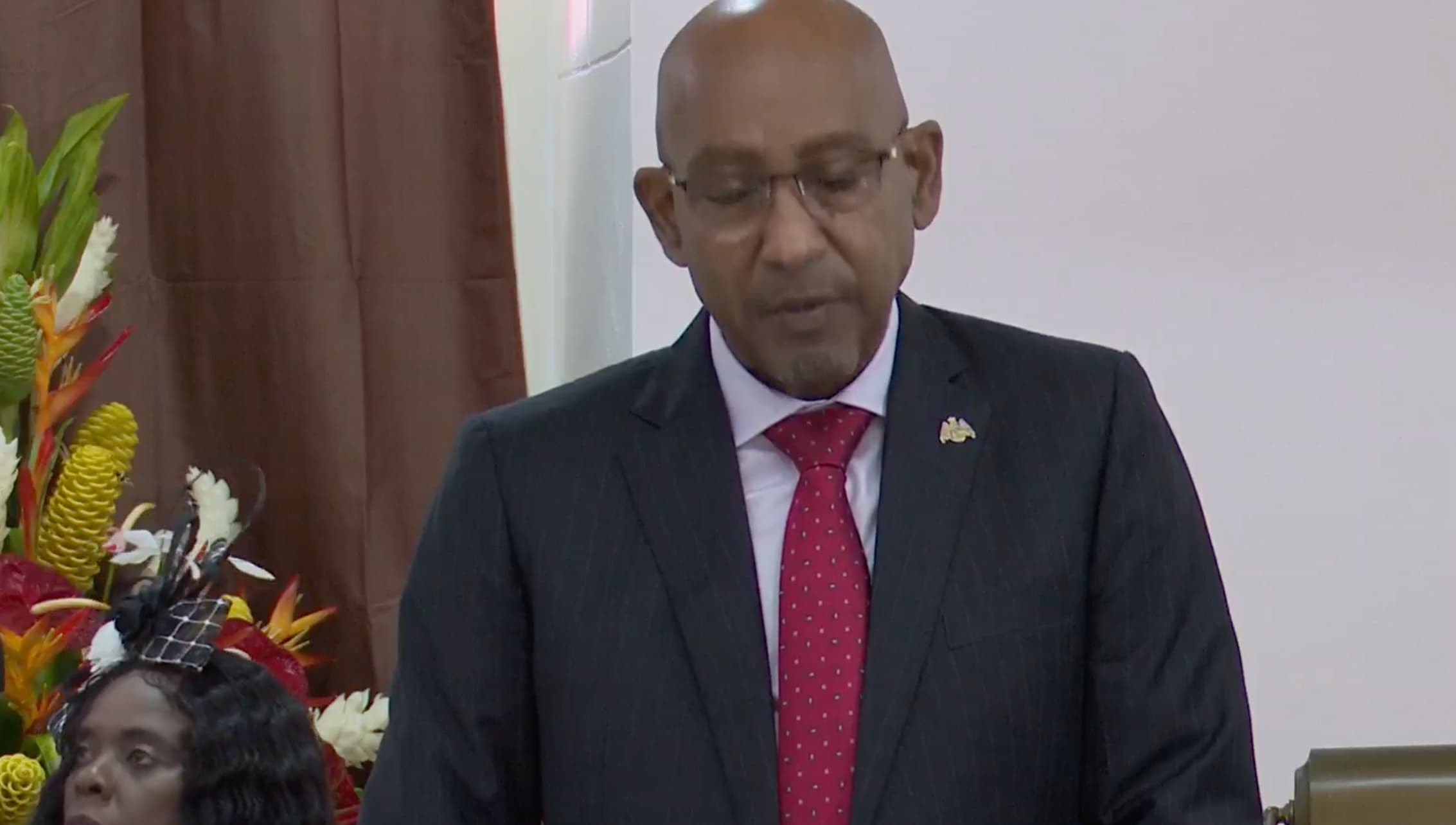
Dominica: Finance Minister Dr. Irving McIntyre presented Dominica’s 2026/2027 National Budget in the House of Assembly on Tuesday, August 4. The budget was presented under the theme of “Protecting Our Progress, Strengthening Our Independence, and Securing Our Future.” The budget outlines EC$1.24 billion in expenditure and projected revenue of EC$1.16 billion. It also introduces a new 10% flat income tax, a EC$43.5 million household relief package.
One of the biggest announcements was the introduction of a single 10% income tax, replacing the current three-tier system of 15%, 25% and 35%. The new tax rate will take effect on January 1, 2027, while the first EC$30,000 of annual income will remain tax-free.
According to the budget, a person who earns EC$48,000 annually will save EC$900 in income tax every year. Those earning EC$60,000 and EC$84,000 annually are expected to save EC$2,500 and EC$6,500 respectively.
The tax reform is a part of a EC$43.5 million Household Relief Package. The package also ends tax compounding on imports from October 1, 2026. VAT and excise taxes will only be applied to CIF value imported goods. VAT and import duty relief on essential goods has also been extended until September 30, 2026. In addition, only income earned in Dominica will be subject to taxation.
While presenting the budget, Dr. McIntyre said that Dominica’s economy has remained strong despite global economic challenges.
The country has recorded the economic growth of 3.5% in 2024, which increased to an estimated 4.5% in 2025. The growth was driven by tourism, construction, wholesale and retail trade, with visitor arrivals increasing by 18.3% during the year.
The International Monetary Fund (IMF) shows that the economy will grow by 3.1% in 2026. According to the finance minister, this is above the projected growth rate for both the global economy and the Eastern Caribbean Currency Union (ECCU).
He also said that the inflation fell from 3.1% to 2.3 % in 2025, while the country’s primary surplus reached 1.8% of GDP, exceeding the original target of 1.3%.
The government has allocated EC$566.9 million for capital projects and EC$290 million. Of that amount, EC$250 million will support the ongoing construction of the international airport, while EC$40 million has been allocated for the Marina Development Project.
Other major capital allocations include EC$70.7 million for the Ministry of Public Works, Public Utilities and the Digital Economy, EC$57.1 million for the Ministry of Environment, Rural Modernisation, Kalinago Upliftment and Constituency Empowerment, and EC$51.7 million for the Ministry of Foreign Affairs, International Business, Trade & Energy.
The Ministry of Finance, Economic Development, Climate Resilience and Social Security received the largest allocation of EC$284.8 million. The allocation includes EC$122 million for debt servicing, EC$70.2 million for marketing and due diligence under the Citizenship by Investment (CBI) Programme, EC$47.3 million for gratuities and pensions for retired public officers, and EC$10.2 million for insurance which includes disaster coverage.
Education received the second-largest recurrent allocation of EC$76.9 million, followed by Health with EC$75.4 million and National Security with EC$67.1 million.
The education allocation will help in supporting teachers' salaries, school operations, student transportation, uniforms and school feeding programmes. The health allocation will be used for medicines, hospitals and other healthcare services.
According to Dr. McIntyre, more than 3,000 climate-resilient homes have already been built across Dominica.
Free tuition at Dominica State College has benefited 343 graduates, while public officers will receive a 3% salary increase during the 2026/2027 fiscal year.
The finance minister also provided an update on five schools which are currently under construction with funding from the Government of the People's Republic of China. The Goodwill Secondary School, Kalinago Primary School and Capuchin Primary School are now 90% complete, while the Tete Morne Primary School and Sineku Primary School have reached 85% completion.
Speaking on the importance of education, Dr. McIntyre said, "Education is not merely a social service. It is the foundation of opportunity, productivity and national progress. Countries that educate their people equip them to create, compete and shape their own future." The budget also highlighted Dominica's progress in renewable energy.
Dr. McIntyre announced that Dominica became the first CARICOM country to generate electricity from geothermal energy. He said that 68% of the electricity supplied by DOMLEC in June 2026 came from renewable sources, with 43% generated from geothermal energy and 25% from hydropower.
The finance minister said the shift to renewable energy is helping to reduce the country's dependence on imported fuel while also lowering electricity costs.
"That is clean energy being supplied to our homes, a reduction in the volume of imported fuel, and lower electricity costs for every Dominican household," he said.
The government also announced several measures to support businesses and create jobs. These include an employment tax rebate of up to EC$10,000 for businesses that create new jobs and EC$19 million in financing through the AID Bank at a 3.5% interest rate for small businesses.
To support the agriculture sector, EC$1.5 million has been allocated to provide free crop insurance for farmers. The budget also includes new tax deductions for commercial rental buildings and business vulnerability funds to encourage investment.
Another announcement was a new population strategy which aims to increase Dominica's resident population to 100,000 by 2040.
Under the plan, people with a Dominican grandparent will become eligible for citizenship from January 1, 2027. The government will also introduce a free two-year "Live in Dominica" residence visa for remote workers and retirees, along with a Returning Dominican One-Stop Service to help returning nationals with housing, business and school-related services.
Tourism was also a major focus of the budget.
Dr. McIntyre said Dominica welcomed 375,646 cruise passengers aboard 189 cruise ships during the latest cruise season, making it the island's strongest cruise season since 2011.
He said the government's priority is to ensure more of the money spent by cruise visitors stays in the local economy.
The finance minister also defended the Citizenship by Investment (CBI) Programme, saying that it has played an important role in Dominica's development over the years. He said CBI funds have helped finance resilient housing, schools, healthcare facilities, roads, agriculture and other public infrastructure, particularly after Hurricane Maria in 2017.
While defending the programme, the finance minister stressed that the government remains committed to diversifying the economy.
Latest
- Jamaica’s Sandz team brings EGO restaurant concept to Kingston
-
Dominica expects 475,521 cruise passengers as 2026-2027 season gets underway -
Hurricane Isaias strengthens in Gulf of Mexico as US Gulf Coast braces for landfall -
Belize: Police reveal alcohol may have been involved in fatal Hummingbird Highway crash -
Antigua: Four juveniles escape from Bolans Police Station
Related Articles


11th of January 2024


26th of February 2023

1st of January 2022

30th of March 2021
