
Jamaica: PM Andrew Holness dismisses concerns over third-country deportation deal
PM Holness said Jamaica was not pressured into the agreement, noting similar arrangements exist in other countries and insisting the deal will not involve accepting individuals with criminal records.
24th of June 2026
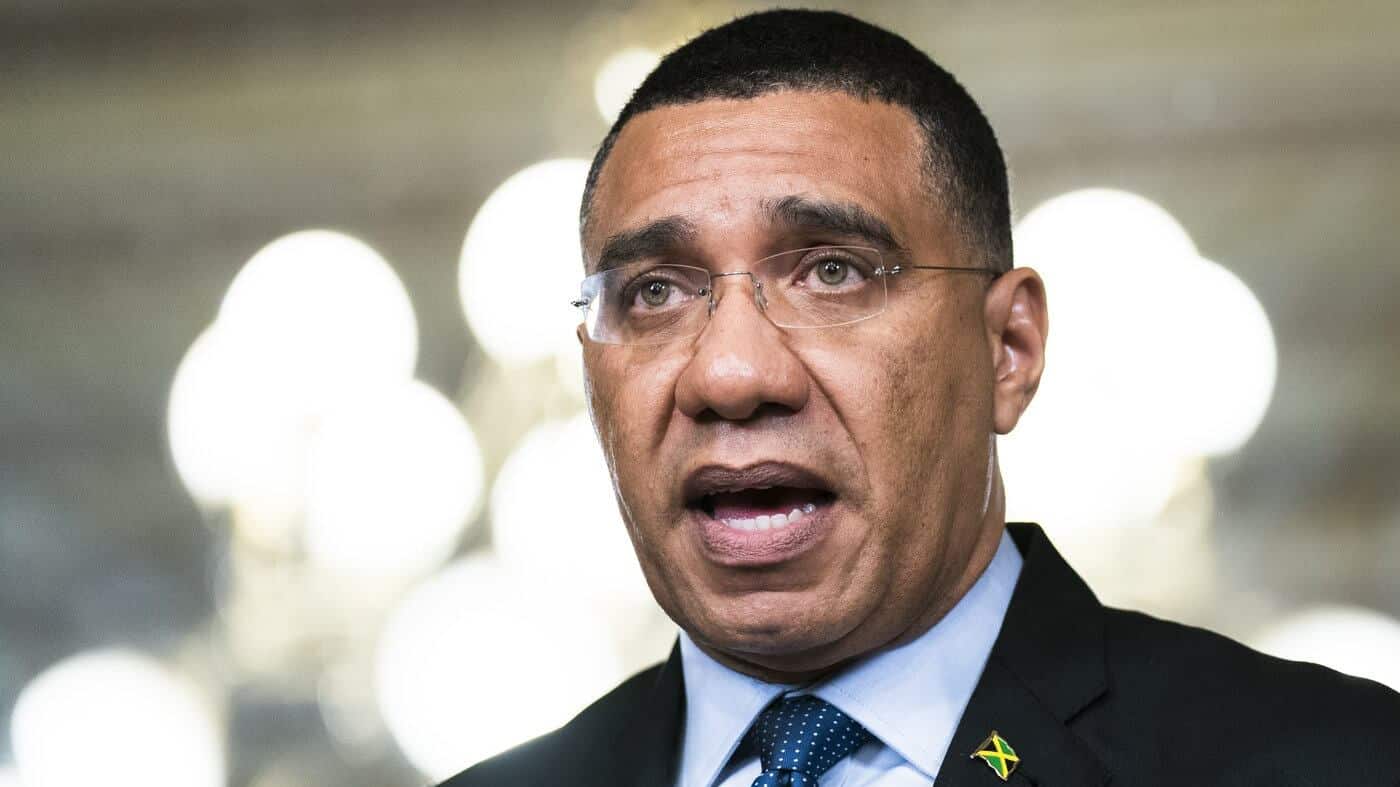
Jamaica: Prime Minister Andrew Holness says no one is seeking to ‘dump’ undesirable persons in Jamaica as part of a controversial deportation deal. He also described public panic surrounding the agreement as almost ‘ridiculous.’
Holness addressed the concerns surrounding this agreement on Monday, June 22, on Nationwide Radio with Cliff Hughes. He said, "I find it, the panic around it, it’s almost to the point of being ridiculous, honestly," he noted further, "I see people WhatsApping me and sending me messages, ‘why would we do this to our country?’ I say, ‘please sit and think carefully about what you're saying’. We're not doing anything that 28 other countries, including within this region, have done."
He said, “Were our hands forced? Were we coerced? Absolutely not,” while rejecting suggestions that Jamaica had been coerced into the deal or that his administration had been slow to agree under pressure from Washington.
Holness added that the United States has asked the countries that it considers its friends to assist them in managing their immigration challenges. “Who are we as Jamaicans? Are we part of the global system? Are we a friend of the United States? Are we looking to the United States to assist with things? Do we only assist in exchange for something? Is the relationship always transactional?” he said.
According to Holness, Jamaica must abandon the 1970s notion of functioning in the world as the times have changed. He said that Jamaica is using its foreign policy for its economic and social development.
The U.S. has entered into third-country national deportation agreements with several countries, a policy that has emerged as a controversial aspect of the Trump administration's immigration enforcement measures. The agreement provides Washington with a mechanism to remove individuals to countries other than their own.
Holness said that the government took into consideration the perception of Jamaicans about the arrangement before agreeing to it. However, Holness insisted that it should not be viewed like that and that the issue is far more than that. "The issue is far more than that, and deeper than that; And nobody's looking to dump. Nobody's looking to create a problem," he said.
He also addressed as to why the deal was not disclosed publicly before, and argued that bilateral negotiations are by their nature conducted in private until a final agreement is signed.
"You can't come until you are finished with all the negotiations, everything is signed and done," he said, adding that a press conference would have been followed once the details were finalised. "You believe that we would have done this in secret, a plane landing with 25 people? It would be all over the news."
He said the MOU is signed but still remains incomplete because the operationalisation has not been completed yet. It has not been implemented.
The arrangement has attracted criticism from opposition figures, trade union leaders, and civil society organisations, who have asked the government to provide more clarity on Jamaica’s involvement. However, National Security Minister Horace Chang, who signed the deal, has clarified that the arrangement excludes individuals with criminal records and unaccompanied minors. The entire operation will be managed by the International Organisation for Migration, and will be fully funded by the United States.
Latest
- Acting PM Geoffrey Hanley confirms Terrance Drew’s return to St. Kitts and Nevis on October 24
-
Belize Highway Crash Claims Lives of Woman and Four-Year-Old Child -
Dominica wins three CREF 2026 awards for Geothermal Energy achievements -
Trinidad: Police await autopsy results in mother-daughter’s fire deaths -
Coral Princess brings Cruise visitors to St. Kitts
Related Articles
![President Dr Irfaan Ali hosted a farewell dinner for the outgoing Chinese Ambassador to Guyana, Guo Haiyan, as part of the celebration of her contributions for the development of bilateral relations between Guyana and China. Speaking at the farewell ceremony for Guo, President Ali lauded her for her instrumental in key aspects of the bilateral […]](https://content.writeups24.com/production/media/10131/image-2024-12-10T110304.889.webp "President Dr Irfaan Ali hosted a farewell dinner for the outgoing Chinese Ambassador to Guyana, Guo Haiyan, as part of the celebration of her contributions for the development of bilateral relations between Guyana and China. Speaking at the farewell ceremony for Guo, President Ali lauded her for her instrumental in key aspects of the bilateral […]")
10th of December 2024


7th of February 2024

29th of April 2023


8th of October 2021
